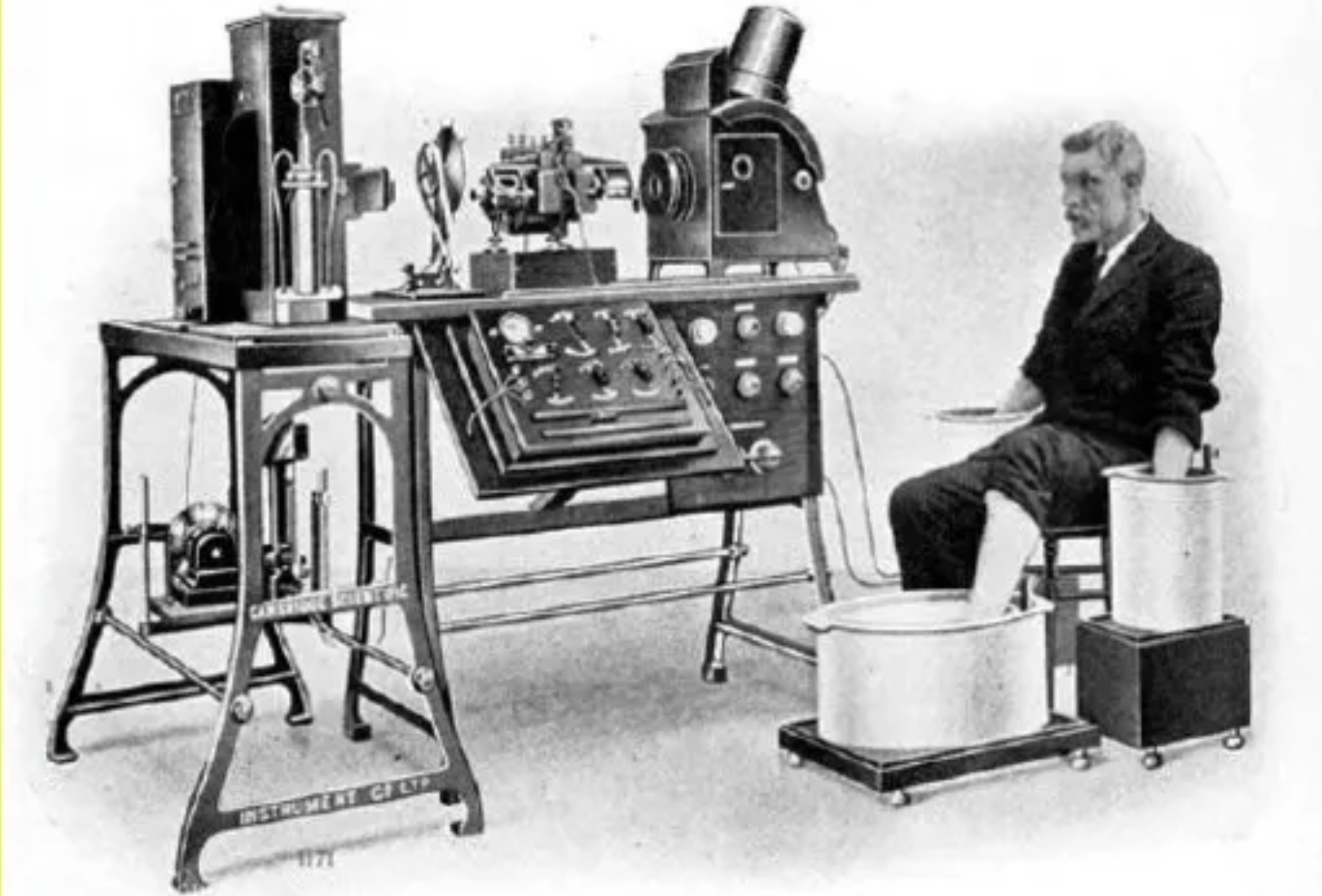
The Fascinating History of the ECG
The electrocardiogram is one of the most important diagnostic tools in medicine. Its history is a journey of innovation and persistence.
The Father of the ECG: Willem Einthoven
In 1901, Dutch physiologist Willem Einthoven developed the string galvanometer, a device capable of recording the heart's electrical activity with unprecedented precision.
Einthoven created:
- The classic leads DI, DII, and DIII
- The wave nomenclature P, Q, R, S, and T
- Einthoven's Triangle
For this work, he received the Nobel Prize in Medicine in 1924.
Technological Evolution
1930s:
- Frank Wilson develops precordial leads (V1-V6)
- Emanuel Goldberger adds aVR, aVL, and aVF
1950s:
- First portable electrocardiographs
- Standardization of the 12 leads
1970s:
- Holter monitors for continuous recording
- First computerized systems
The ECG in the Digital Age
Today, the ECG has evolved from enormous machines that filled entire rooms to:
- Smartwatches that detect atrial fibrillation
- Mobile apps that analyze ECG images
- Artificial intelligence that assists in diagnosis
The Future
The combination of wearable technology, telemedicine, and AI promises:
- Early detection of arrhythmias
- Remote patient monitoring
- More precise and accessible diagnoses
The Permanent Importance of Human Knowledge
Despite all technology, human knowledge remains fundamental. Algorithms are tools - integrated clinical interpretation still depends on the well-trained physician.
From Einthoven to smartphones, the ECG continues to be a window to the heart.
Learn more on Kraemer Academy